
Yes, movers can pack for you when packing is part of your confirmed service. You can ask for your whole home, selected rooms, or specific fragile items to be packed. Before booking, confirm the packing labor, materials, preparation tasks, and unpacking arrangements in writing. Moving furniture and loading boxes do not automatically include packing their contents.
Kometa can pack your whole home, selected rooms, or individual items. Tell us whether the job includes cupboards, dishes, books, clothing, or only the fragile pieces you have left unpacked. We use that inventory to plan the crew, supplies, and working time.
This guide explains how to specify that work, compare estimates, prepare your home, and check the handoff at delivery. It also separates general industry practices from Kometa Moving’s published information, so you can make a decision without assuming every company sells the same package.
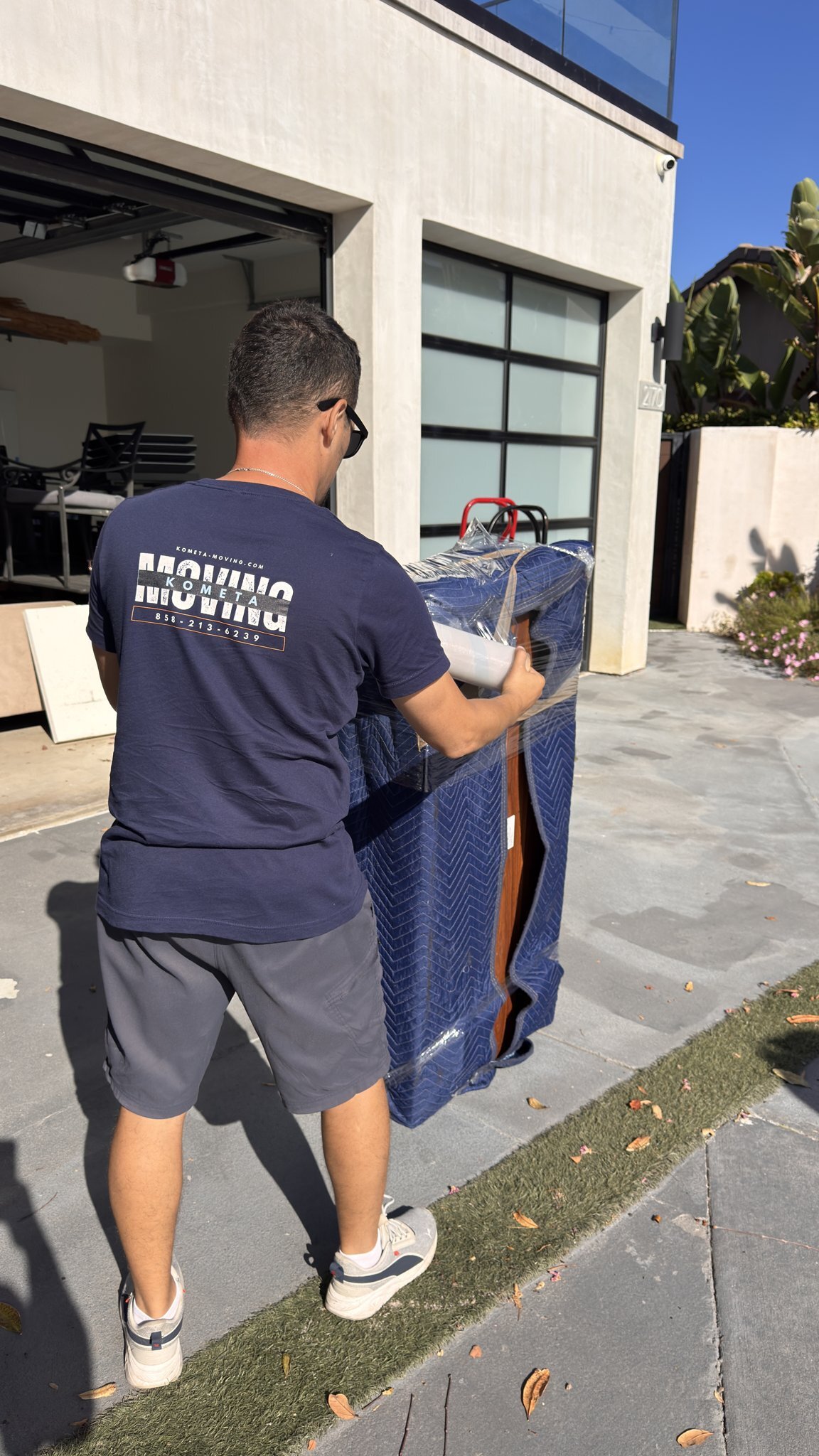
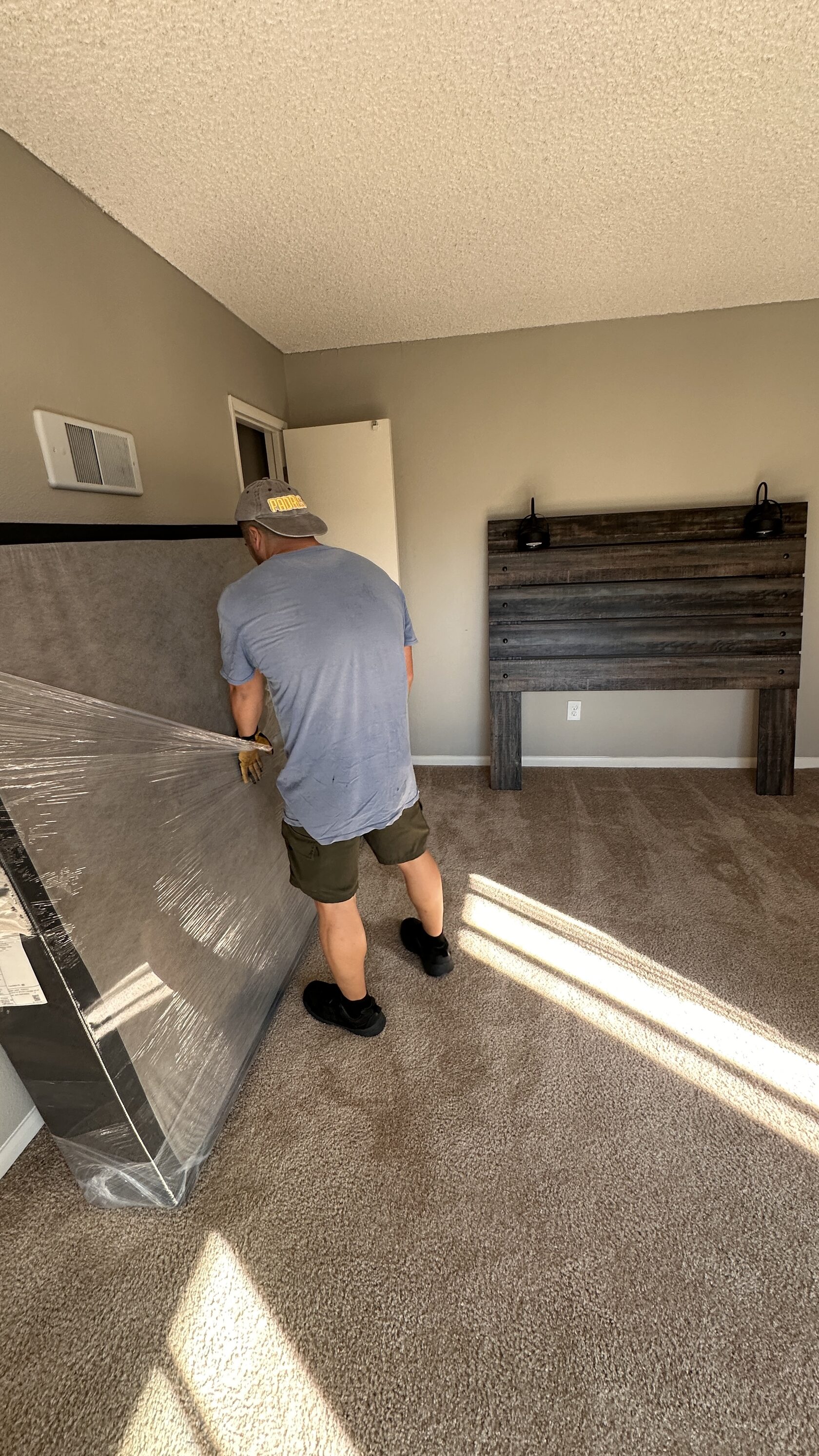
At Kometa, furniture protection and packing loose household contents are different parts of the job. The team provides blankets for furniture protection, free stretch wrap and tape, and temporary use of wardrobe boxes and speed packs. Cartons, packing paper, and bubble wrap have separate material prices. Unpacking is available at the ordinary hourly rate, and selected-room or selected-item help can be arranged.
Packing services at a glance
| Your question | Practical answer | What to confirm |
|---|---|---|
| Will movers pack all my belongings? | They can pack the agreed household contents; personal essentials and excluded items need a separate plan. | Rooms, cupboards, storage areas, and exceptions. |
| Can I hire help for only the kitchen? | Selected-room packing is a service option to discuss. | Exactly which cabinets, appliances, and fragile pieces are included. |
| Are boxes included? | Supply policies differ, even when packing labor is included. | Carton types, quantities, charges, and ownership of reusable equipment. |
| Does wrapping furniture count as packing? | It protects furniture, but does not describe boxing the contents of your home. | Furniture preparation versus carton packing. |
| Will the crew unpack everything? | Only the unloading, unboxing, placement, and cleanup tasks agreed for delivery. | What “unpacking” means in your estimate. |
| Is professional packing damage-proof? | No. Good preparation reduces avoidable handling problems but cannot eliminate every risk. | Documentation and the protection terms for your move. |
What does it mean when movers pack for you?
Professional packing means preparing the agreed contents of your home for transportation. The work may include choosing containers, separating items that should not touch, cushioning fragile pieces, organizing contents, closing cartons, and labeling them for delivery. It should leave a clear record of what is ready to load and what remains outside the shipment.
Think about a dining room. Carrying the dining table is moving labor. Protecting its surface and legs is furniture preparation. Emptying a display cabinet, wrapping the glassware, separating serving dishes, and labeling those cartons is packing. Taking the cabinet apart, if necessary, is another task to identify. A single room can involve all four activities, but an estimate should not leave their inclusion to guesswork.
The same distinction applies at the destination. Carrying a kitchen carton into the kitchen is unloading. Opening it and removing the contents is unpacking. Deciding which shelf should hold each category, lining drawers, and creating a storage system is organizing. These tasks can happen together, but they are not interchangeable descriptions of work.
When requesting help, use the names of the actual jobs. “Pack the dishes in these six cupboards, leave the pantry to me, and unpack the dishes onto the counter” communicates much more than “I need a full-service move.” It also gives the estimator something concrete to price and the crew something concrete to complete.
If you are arranging local moving in San Diego, discuss packing before the arrival day is fixed. Packing can influence the crew’s arrival time, the materials brought to your home, and whether loading should happen during the same appointment.
Is packing included in the moving price?
Packing may be separately priced, bundled into a package, or performed within a moving crew’s hourly service. “Packing labor included” does not necessarily mean unlimited packing time or every kind of box is free. The written scope and pricing terms determine what you are buying.
Ask two separate questions: “Who will do the packing?” and “How will that work be charged?” A company can provide packers without including their time in a basic transportation estimate. Another company may allow the booked crew to pack during paid hours. A third may quote a specified packing job separately from transportation. Comparing only the hourly rate misses those differences.
At Kometa Moving, basic furniture protection includes moving blankets and stretch wrap, with stretch wrap and tape provided at no additional material charge. Wardrobe boxes and speed packs are available for use during the move. Packing loose belongings—such as books, dishes, and small household items—takes additional working time, and the ordinary cartons supplied for that work are charged separately. See the materials table below and review the current moving rates for the labor side of your estimate.
One useful question is: “Does the estimated duration already include the packing I showed you?” Without that clarification, a customer may compare an estimate for transporting prepared belongings with one that also includes emptying cupboards and making cartons. Those are different jobs even if the truck and crew size match.
Keep the approved scope with your estimate. If you later add the garage or decide the crew should pack a home office, send that change before moving day. An updated list helps everyone distinguish a genuine change in work from a misunderstanding about the original booking.
Which packing option fits your move?
The best packing arrangement matches the work you cannot reasonably finish yourself. Start with your deadline, available help, item types, and the rooms that still need attention. Then ask the mover which combination it can provide for your date.
| Approach | Work you keep | Work to request | A useful fit when |
|---|---|---|---|
| Self-packing | Sorting, supplies, wrapping, boxing, and labeling | Moving the prepared shipment | You have time and can prepare the contents appropriately. |
| Selected-room packing | Everything outside the named rooms | The specific cabinets and contents listed in the scope | One or two rooms are holding up the move. |
| Fragile-item packing | Ordinary household cartons | Named delicate items and their packaging | Breakable pieces need more attention than you can give them. |
| Whole-home packing | Decisions, personal items, exclusions, and access | The agreed contents throughout the property | Your schedule or circumstances make household packing impractical. |
| Finishing help | Completed rooms and cartons | A photographed list of remaining loose items | Packing has started but cannot be finished before loading. |
Whole-home packing
Whole-home packing works best with a complete walkthrough. Show the estimator the inside of cabinets, closets, and storage furniture, as well as the rooms themselves. A neat living room can conceal substantial work behind closed doors. Include the garage, balcony cupboards, under-bed containers, and any storage unit involved in the booking.
Decide what is staying before the crew begins. Packers cannot reliably infer that an old lamp is for donation or that a stack of papers is awaiting shredding. Mark excluded items clearly and place personal essentials outside the work area. You still own the decisions about what moves, even when someone else handles the physical packing.
Selected-room packing
A room-based arrangement needs boundaries. “Kitchen only” could mean dishes and glassware, or it could also mean pantry contents, small appliances, cookbooks, drawer organizers, and decorative items. Name those categories and identify what you will finish yourself.
This approach is particularly useful when ordinary bedroom and linen packing is manageable but one complicated room is not. It keeps the professional work concentrated without creating a patchwork of unclear responsibilities across the entire home. The crew should be able to enter the room and recognize the agreed job immediately.
Fragile-item packing
Describe fragile items individually when their dimensions, surfaces, construction, or value require special planning. A framed poster, a large mirror, a ceramic sculpture, and a stone tabletop should not all appear as “a few fragile things.” Send photographs that show the whole object, its base or support, and the route out of the room.
Ask whether the company can prepare the item with ordinary moving materials or needs another arrangement, such as a purpose-built container. Availability should be confirmed before promising a date. Custom work, unusual surfaces, and pieces that cannot be safely carried through the existing route need their own discussion.
Finishing help when you are behind schedule
If packing is unfinished, give the mover an honest update. Photograph the remaining contents rather than reporting that you are “almost done.” Several open kitchen cupboards can require a different response from a few loose cushions and lampshades.
Ask what can be added within the available appointment and whether the schedule or estimate must change. Do not assume that a moving crew carries an unlimited stock of every carton. Early information gives the company a chance to plan; surprising the crew at the door leaves fewer workable options.
What should a professional packing estimate include?
A useful packing estimate describes the assignment well enough that another person could understand it without hearing your phone call. It should connect the contents, labor, materials, and timing rather than simply show a price next to the word “packing.”
Start with the inventory. Use actual storage areas: upper kitchen cupboards, lower kitchen cupboards, hall closet, office shelves, and garage cabinets. State whether those areas are full, partly packed, or excluded. If a room has both items you will pack and items the crew will handle, separate them into two lists.
Next identify the supplies. Ask whether the estimate includes cartons, paper, cushioning, tape, mattress protection, picture packaging, or special containers. For reusable items, ask whether you are borrowing them during the move or purchasing them. If you already own boxes, describe their condition and sizes before assuming they can replace the proposed materials.
Finally, connect the packing plan to the moving plan. Will packing happen before moving day? Is it the same crew? Who approves extra materials? What happens if a building’s permitted moving hours are shorter than the work requires? Confirm these building restrictions before the crew is scheduled.
| Estimate line | A clear description | An ambiguity to resolve |
|---|---|---|
| Contents | Kitchen dishes, glassware, and small appliances; pantry excluded | “Some packing” |
| Labor | Identified team arrangement and charging method | A price without a crew or scope |
| Materials | Included supplies plus separately priced items | “Materials available” |
| Timing | Packing appointment and loading appointment, if separate | No time allocated before loading |
| Special pieces | Named items with preparation requirements | “Fragile items handled” |
| Delivery work | Unbox onto surfaces, place agreed items, or another defined task | “Full unpacking” without explanation |
| Changes | Contact and process for approving added work | Verbal additions with no record |
For a whole-move budget, use Kometa’s San Diego moving cost guide alongside your packing scope. A room-count estimate for transportation should not substitute for an inventory of the contents that still need boxing.
How much does it cost to have movers pack for you?
Packing cost depends on the work and the charging method: labor, supplies, special preparation, and any separately agreed services. Bedroom count is a starting point for a conversation, not a reliable packing quote by itself.
Two one-bedroom homes can contain very different inventories. One may have a small dish set, a few shelves, and a lightly filled closet. Another may have extensive cookware, framed art, books, hobby equipment, and a storage locker. The second home can require considerably more packing decisions and materials even though both have one bedroom.
Access also matters when it changes how work is organized. A crew needs room to prepare cartons and a clear route between the packing area and the truck. If boxes must be moved repeatedly to create working space, or a loading appointment is interrupted, the workflow changes. Describe those conditions while the estimate is being prepared.
Kometa crew rates and the dispatch fee
Kometa’s pricing page lists crew-and-truck hourly rates, a three-hour minimum, and a $100 Flat Dispatch Fee. These are crew rates, not per-person prices. Confirm the applicable rate and terms for your appointment before booking.
| Crew and truck | Hourly crew rate | Three-hour labor minimum | Labor minimum plus $100 dispatch |
|---|---|---|---|
| 2 movers + truck | $139 | $417 | $517 |
| 3 movers + truck | $179 | $537 | $637 |
| 4 movers + truck | $219 | $657 | $757 |
These totals exclude separately charged materials and any other applicable charges. They do not predict how long your move will take. Loading, transportation, unloading, applicable double drive time, and specialty work can affect the final bill. Ask how a separate packing appointment would be charged; do not assume a second visit shares the first appointment’s minimum or dispatch fee.
Separate packing from the total moving bill
For packing performed during a moving appointment, labor uses the agreed crew rate. Do not add the same hours or dispatch fee twice when they are already included in the booking. The number of workers alone does not determine the final cost: a kitchen has limited working space, and delicate pieces take care regardless of how many movers are present.
The example below uses Kometa’s $139 rate with an assumed three billable crew-hours and specified supplies. The quantities and duration are illustrative, not a typical-home quote or a promise that the entire move will finish in three hours.
| Example line item | Quantity and rate | Amount |
|---|---|---|
| Two-mover crew labor | 3 hours × $139 | $417 |
| Flat Dispatch Fee | One appointment | $100 |
| Small boxes | 10 × $4 | $40 |
| Medium boxes | 8 × $5 | $40 |
| Large boxes | 4 × $6 | $24 |
| Packing paper | 200 sheets | $60 |
| Example subtotal | Listed labor, dispatch, and materials | $681 |
| Optional bubble wrap | One roll | Add $50; subtotal $731 |
This subtotal excludes additional moving time and other applicable charges. For example, if the crew spends longer packing or still needs to load, drive, and unload, the final total changes. Have the estimate state the work being covered and the treatment of travel and other fees.
Kometa Moving’s packing material prices
The following material prices are supplied by Kometa Moving for this guide. They describe materials, not a complete packing or moving quote. Ask the team to confirm quantities and the final scope when preparing your estimate.
| Material | Size or basis | Kometa price or use policy |
|---|---|---|
| Small box | 1.5 cubic feet | $4 per box |
| Medium box | 3.0 cubic feet | $5 per box |
| Large box | 4.5 cubic feet | $6 per box |
| Bubble wrap | 48″ × 1/2″ × 250′ per roll | $50 per roll |
| Packing paper | 200 sheets | $60 per pack |
| Stretch wrap | Used by the crew during the move | No additional material charge |
| Tape | Used by the crew during the move | No additional material charge |
| Wardrobe boxes | Temporary use during the move | Provided for use; not a gift or purchase |
| Speed packs | Temporary use during the move | Provided for use; not left with the customer by default |
| Moving blanket kept by the customer | Per blanket | $25 to purchase |
For example, 10 small boxes, 8 medium boxes, and 4 large boxes cost $104 in cartons: $40 plus $40 plus $24. Adding one roll of bubble wrap brings that materials example to $154. Packing labor and the rest of the move are separate from that calculation. This is an example quantity, not a recommended box count for a particular home size.
If that same example also includes one 200-sheet pack of packing paper, the materials total becomes $214. Confirm what protection the contents actually need before ordering both paper and bubble wrap. The $50 bubble wrap roll measures 48 inches wide, with 1/2-inch bubbles and a 250-foot length.
Use carton prices to compare like for like. A large box holds more volume, but it is not the right choice for every object, especially dense contents. Ask the team to recommend a mix based on what you are packing. Buying fewer oversized boxes can be a false economy if they become too heavy or do not support their contents properly.
Keeping blankets for storage
If you want a Kometa moving blanket to remain with furniture in storage, you can purchase it for $25 per blanket. For a short storage period—for example, about a month—with Kometa booked to move the furniture out again, discuss an arrangement in advance for the blankets to remain temporarily and be collected at the return move. This requires agreement; it is not an automatic blanket-rental entitlement attached to every storage job.
Confirm how many blankets will stay, the expected return appointment, and what happens if plans change. The same distinction between temporary equipment and purchased supplies applies to wardrobe boxes and speed packs. Tell the team if a container needs to remain in storage rather than being emptied during the move, so it can confirm an appropriate arrangement.
Ask for useful alternatives
Instead of requesting an unexplained discount, ask for two clearly defined options: the entire agreed inventory, and the kitchen plus fragile items only. You can then see what work and supplies disappear from the second scope. That is a more useful comparison than two headline prices whose contents differ.
When deciding what to do yourself, consider your actual schedule. If you have only one available evening, assigning yourself every ordinary carton may be unrealistic. An affordable plan is one you can complete without leaving a second unplanned packing job for moving morning.
What packing materials do movers bring?
Movers should bring the materials planned for the job you described. The exact assortment depends on the company, the inventory, and the agreement. A truck equipped to move protected furniture is not necessarily stocked for packing every cabinet in an unexpected whole-home job.
Cartons have different purposes. Small, sturdy boxes can help keep dense contents manageable. Larger containers suit lighter items when their construction and load limits are appropriate. Dish cartons, wardrobe cartons, picture containers, and equipment packaging serve different needs. Choosing the right container is part of planning the contents, rather than a reason to order the same box for everything.
Ask how protective materials will interact with sensitive surfaces. Tape should not be assumed safe on finished furniture, and cushioning choices for artwork or unusual finishes may need special advice. Share manufacturer guidance or existing packaging when you have it. A protective material that works for one object can be unsuitable for another.
If you want to supply cartons yourself, show their condition. Weak bottoms, damaged corners, moisture, old food residue, and missing flaps make a box a poor candidate for reuse. Existing labels should be removed or covered so they do not conflict with the new destination. Ask the crew to assess questionable boxes before they are loaded, rather than treating tape as a cure for every structural problem.
Also clarify what happens after delivery. Borrowed wardrobe boxes or reusable equipment may have to be emptied within the agreed service window. Purchased cartons may remain yours. Pickup of used materials is a separate logistical question; ownership of boxes does not automatically include collection from the new address.
What should you show the estimator in each room?
A room-by-room plan is useful because it exposes exceptions before packing begins. The goal is not to prescribe one universal packing technique. It is to make sure the estimator and crew know what they are handling and what information you need to provide.
Kitchen: separate everyday contents from special pieces
Open every storage area during the survey, including deep drawers, the cabinet above the refrigerator, and rarely used entertaining supplies. Point out fragile stemware, unusually shaped serving pieces, appliance attachments, and anything that should remain accessible until the last meal at home.
Empty and clean the small appliances you intend to move. Keep removable attachments associated with their appliance, and flag sharp or delicate components so they are not discovered by touch. Tell the crew about a loose handle, cracked bowl, or unreliable latch. Recording existing condition helps the team choose an appropriate handling plan.
Decide which food you will take personally and what the mover accepts. A closed pantry package is not the same as a refrigerator full of perishables, and an opened bottle needs a different decision from a dry container. Do not mix cleaning products into food cartons. Ask for the mover’s accepted-item guidance before the kitchen is boxed.
For delivery, identify the essentials first: a small set of dishes, a pan, utensils, coffee equipment, and whatever your household needs immediately. Label these as a separate priority group. A kitchen can be correctly packed yet frustrating to use if the everyday items are spread across several unmarked cartons.
Bedrooms and closets: decide what stays accessible
Prepare a personal bag before clothing packing begins. Include clothes for the transition, chargers, toiletries, and items you cannot wait to recover. This prevents a later search through wardrobe containers for something that should never have entered the shipment.
Ask how hanging clothing will be handled and how wardrobe containers are supplied. Count hanging sections and identify long garments rather than assuming one closet equals one container. Shoes, belts, and accessories need their own organization; loose items at the bottom of a wardrobe box can be overlooked during unpacking.
Remove valuables, documents, and loose breakables from dresser drawers. Ask whether any clothing may remain inside a particular piece. The answer depends on its construction, contents, condition, and carrying route. A sturdy dresser on a straightforward route and a delicate chest on a narrow stairway should not automatically receive the same instruction.
Living rooms: disclose screens, glass, and awkward shapes
Give the mover the size and model information for large screens, along with details of the stand or wall mount. Confirm who removes the screen from the wall and who handles installation at the new address. Transporting a television does not by itself include mounting it or repairing the wall left behind.
Photograph cable connections if you will reconnect equipment yourself. Label cables by device, and keep remotes and power supplies together in clearly identified packaging. Avoid labeling every cable carton simply “electronics”; that makes setup harder when several rooms contain similar devices.
Identify loose glass shelves, removable legs, lampshades, and decorative pieces that can separate from their bases. Tell the crew about fragile repairs or old adhesive joints. These details can affect how an item is supported even when the damage is not obvious from a distance.
Home offices: protect access as well as equipment
Keep the equipment you need during the transition separate from the shipment. A work laptop, security key, charger, and essential paperwork should not disappear into cartons if you need to work before delivery is complete. Back up important files before disconnecting a desktop system.
Label peripherals and accessories by workstation, especially if several family members use similar equipment. Remove sensitive papers from mixed desk drawers before packers arrive. Packers can box physical contents, but they should not have to decide which records are confidential, needed immediately, or ready for disposal.
For a business relocation, designate someone to approve the equipment inventory and placement plan. Ask about the boundary between physical moving and IT setup. Moving a workstation is a different assignment from configuring a network, restoring backups, or connecting business systems.
Bathrooms, utility areas, and the garage
Sort these spaces before the survey is finalized. They often contain products that need a separate handling decision, such as cleaning chemicals, automotive supplies, opened liquids, batteries, and garden products. Send the mover a list rather than assuming that everything stored in the home can travel with household goods.
Keep medication and personal care essentials with you. For accepted liquids, ask how they should be prepared and separated from items that can be damaged by leakage. Clean and dry items before packing; moisture trapped in a closed container can create problems even on a short relocation.
Show the garage in detail. A wall of tools, loose hardware, stored equipment, and hobby supplies is more informative than the label “one garage.” Identify equipment requiring preparation instructions from the manufacturer. If a machine needs servicing, draining, disconnection, or specialist handling, arrange that before the packing crew is expected to load it.
What should you keep out of the packing job?
Separate three categories: belongings you need personally, items the mover does not accept, and possessions you are not taking. Mixing these groups creates confusion because their destinations are different. A donation box should not be treated like an essentials bag, and a product requiring special disposal should not be hidden among ordinary household supplies.
| Category | Examples to identify | Your next step |
|---|---|---|
| Personal access | Identification, keys, medication, work devices, travel documents | Keep them in your own clearly separated bag. |
| Restricted or potentially hazardous products | Fuel, propane, certain chemicals, ammunition, and other products requiring assessment | Obtain the mover’s exclusion list and arrange appropriate handling. |
| Temperature-sensitive contents | Perishable food, live plants, sensitive products | Discuss acceptance and arrange a suitable separate plan when needed. |
| Irreplaceable possessions | Jewelry, original records, small sentimental items | Decide what you will carry personally and document the rest. |
| Items staying behind | Landlord-owned equipment, donations, rubbish, fixtures not included in the move | Label and physically separate them before packing. |
Do not treat a general internet list as permission to ship a particular product. Give the mover the product name and relevant details. Acceptance can depend on the substance, condition, route, and service policy. Professional packing is not a workaround for a transportation restriction.
Create a designated personal area before the team arrives. A closed suitcase in a clearly marked room is easier to protect from accidental loading than loose objects scattered around the kitchen. Tell the crew where the area is, and tell everyone in your household to respect it. Otherwise, a helpful family member may move the essentials back into the packing zone.
Also set aside the tools needed to finish leaving the property. These may include cleaning supplies you will transport appropriately, spare keys, a phone charger, and the paperwork for the final handover. The best essentials list follows your actual day: what you need before loading, between addresses, and before the first cartons are opened.
How long does professional packing take?
Planning examples from the Kometa Moving Team
For a two-bedroom home, the Kometa team uses roughly 30–40 boxes as a starting planning reference and typically plans a three-mover crew. A large kitchen can take about one to three hours with at least one mover assigned to it. These are team-provided working estimates, not audited averages, a guaranteed box count, or a promise for every home.
| Work being planned | Kometa working reference | What the estimate still needs |
|---|---|---|
| Two-bedroom home | Around 30–40 boxes; three movers | Actual contents, carton sizes, fragile items, and access |
| Large kitchen | One assigned mover; about 1–3 hours | Cupboards, dishes, glassware, appliances, and special pieces |
The kitchen estimate describes one person’s task. It is not the duration of packing the entire two-bedroom home. Other crew members can be working elsewhere at the same time. A three-mover crew is billed at the agreed crew rate; the published three-mover-and-truck rate is $179 per hour. Do not multiply one person’s kitchen time by the whole crew rate and then count the crew’s overlapping work again.
Show the team the actual kitchen and closets before relying on a bedroom count. Full cupboards, individually wrapped fragile pieces, and limited space to stage cartons can add work. An inventory lets the estimator explain those allowances instead of treating every two-bedroom home as identical.
There is no dependable room-count formula that applies to every home. Packing time is affected by the quantity of loose contents, the care individual objects need, preparation already completed, workspace, crew arrangement, and interruptions. Ask for an estimate based on the inventory rather than a promise attached only to square footage.
A useful survey distinguishes visible furniture from hidden contents. Five bookshelves with densely arranged books represent a different assignment from five nearly empty shelving units. A cabinet of everyday dishes differs from one containing irregular collectibles that need separate preparation. Photos should show those differences instead of only the room’s overall appearance.
Packing and moving on the same day
Combining the work can be practical when the scope and available hours support it. However, every carton must be ready before it can be loaded. If packing takes longer than expected, the delay can affect departure and the delivery appointment. Explain any hard deadline, such as a building’s loading window or the time keys become available.
Ask how the team plans to sequence the job. It may be possible to prepare some rooms while other completed items are moved, but that depends on the crew and layout. Keep one communication lead so several people are not giving competing instructions while the team is working.
Packing before moving day
A separate packing appointment can create more room in the schedule, but it also changes how you use the home overnight. Identify the bedding, clothing, kitchen basics, and bathroom items that should remain available. Specify who will pack those last-use items and when.
Make sure finished cartons do not block exits or access to essential rooms. If the home remains occupied between appointments, choose a staging plan that works for the household. Packing ahead should reduce uncertainty, not leave you unable to find medication or move through the property safely.
For long-distance moving from San Diego, also discuss how long you may be without the shipment. Your personal bag should cover that interval. The phrase “long distance” alone does not tell you whether a move crosses a state line or which rules apply.
How do you prepare for movers who are packing?
Your main preparation is to make decisions and provide access. You do not need to complete the job you have hired the team to do, but you should remove uncertainty about what moves, what stays, and what needs special attention.
Before the packing scope is finalized
Declutter first when practical. Remove or clearly separate items you intend to sell, donate, or discard. Otherwise, the estimate may include contents that will not move, or the crew may spend time preparing things you later exclude. Do not leave the final sorting of private papers or family possessions to someone who cannot know their significance.
Record the items requiring discussion. Include fragile repairs, unusually heavy contents, sensitive finishes, missing hardware, and pieces that were assembled inside a room. Send a photograph and a short explanation for each. This gives the company a chance to consider packaging and access before the service date.
During the week before the appointment
Confirm building access and the moving schedule. Make sure the person opening the property knows the arrival window and can answer questions. If another person is supervising, share the agreed packing list and give them enough authority to resolve ordinary placement questions.
Arrange preparation that falls outside the mover’s scope. This may include a technician disconnecting an appliance or specialist work on a mounted object. Follow the manufacturer’s instructions and use qualified help where appropriate. Do not assume that booking packers also books electrical, plumbing, gas, or installation work.
The evening before packing
Pack your personal essentials, separate the excluded items, and clear working surfaces. A usable table or counter can make room for organized packing. Remove obstacles from the carrying route without stacking everything in front of the exit.
Place destination labels or a simple room plan where the team can reference them. If the new home has different rooms, label by destination rather than by the old layout. “Office upstairs” is more useful than “spare room” when the latter could mean several spaces.
At the opening walkthrough
Walk the team through the agreed inventory. Point out exceptions before the first cupboard is emptied. Explain which items need to remain available and show the location of the personal area. Confirm the plan for last-use items, fragile pieces, and completed customer-packed cartons.
Keep communication focused. One person should be available to answer questions, but the crew needs room to work. Arrange a suitable space for children and pets away from packing materials, open doors, and carrying routes. A quiet, accessible workspace helps prevent interruptions and unclear instructions.
San Diego apartment and condo packing: coordinate the building first
Packing inside your unit and moving cartons through shared areas may involve different building arrangements. Ask management about both parts rather than assuming an elevator reservation covers every activity. Requirements vary by property; use the actual instructions for your building.
Confirm the allowed service hours, the entrance for the crew, loading access, and any elevator booking. Ask whether the building requests insurance documentation and where it should be sent. A document request should reach the mover early enough to address the property’s requirements; it should not first appear when the team arrives.
Share access information for the destination as well. The loading appointment at the first building and unloading appointment at the second must allow for the work between them. Do not schedule the destination elevator solely around the driving time shown on a map while ignoring packing and loading.
Tell the mover about parking limitations, distance from the entrance, garage clearance, stairs, and tight turns. Where street loading is involved, verify the arrangement with the appropriate authority or property contact rather than assuming cones or an informal agreement reserve public space. The aim is a confirmed access plan, not a generic promise about permits.
If the building has a strict departure deadline, ask whether packing should happen earlier. Preparing cartons during a separate appointment may be worth discussing when a same-day schedule leaves little margin. The correct choice depends on the inventory and building rules, not simply on whether the apartment is described as small.
How should you divide packing between yourself and the crew?
A hybrid plan succeeds when responsibility is visible at the item or storage-area level. It becomes difficult when both parties believe the other will finish a category. Write the division down and label the areas accordingly.
For example, you might handle clothing, books, and linens while requesting help with dishes and named fragile pieces. That is a planning example, not a recommended split for every household. Your ability, available time, and the specific items matter more than a standard checklist.
| Area or task | Customer’s assignment | Crew’s requested assignment |
|---|---|---|
| Bedroom wardrobe | Set aside personal clothing and pack folded items | Prepare agreed hanging garments |
| Kitchen | Remove food and personal essentials | Pack the specified dishes, glassware, and appliances |
| Home office | Separate records, back up files, identify essential devices | Pack the agreed equipment and remaining contents |
| Living room | Identify destinations and remove excluded possessions | Prepare the named fragile pieces and other agreed contents |
| Final loose items | Report what remains before the appointment | Complete only the added work the company has accepted |
Avoid packing fragile objects loosely inside a carton and expecting a mover to correct the interior by adding tape outside. If you want professional repacking, identify those cartons in advance. The company may need to reopen them, inspect the contents, replace materials, and account for the additional work.
Keep completed customer-packed cartons distinguishable from cartons prepared by the crew. Use a consistent label system, and ask how the mover records the distinction. This helps with inventory and questions later without creating the mistaken impression that every box was packed by the same person.
Most importantly, report progress honestly. If your assignment is not complete, send a revised list. A workable hybrid arrangement is based on the actual state of the home, not the plan everyone hoped would be finished.
What happens if something is damaged?
Professional packing does not automatically provide unlimited reimbursement. Packing service and shipment protection are separate matters. Ask which protection terms apply, how customer-packed cartons are handled, and what records the company needs if you report damage.
For interstate moves, FMCSA explains the distinction between Full Value Protection and Released Value and notes that self-packing can make a damage claim harder to establish. That is different from saying every customer-packed item has no protection. The agency also distinguishes interstate rules from rules for moves within a state. See FMCSA’s liability and protection guidance.
For a move entirely within California, consult the California Bureau of Household Goods and Services moving resources and the documents provided for your move. A long trip within California is still different from a move crossing state lines.
Photograph important items before packing, identify existing damage, and retain the estimate and inventory. At delivery, document a concern with photos of the item and relevant packaging, then contact the mover promptly for its reporting procedure. Keep materials until the company explains whether they are needed for review.
Do movers unpack for you, too?
Kometa Moving offers unpacking at the ordinary hourly rate. You can request help with selected rooms or items, or plan a broader unpacking job. Purchased cartons belong to you. The team can discuss taking those boxes if you want to hand them over, but general rubbish and used stretch wrap are not currently collected as part of the service.
Unpacking should be described as carefully as packing. Ask whether the service means opening cartons, removing wrapping, placing contents on surfaces, putting items into assigned storage, or collecting the used materials. You may want all of those tasks, but they should not be assumed from one word.
Before delivery, identify usable surfaces for unboxed contents. A kitchen counter covered with unrelated cartons leaves little space for dishes. A bedroom filled with bags makes it difficult to place bedding and personal items. The destination needs a working plan just as the original home did.
Agree on priorities. You might want the bed and everyday kitchen items usable first, followed by clothing and the home office. Identify those cartons during packing so the information survives the trip. A priority label is useful only if the people unloading understand what it means.
Separate placement from organizing. You can tell a crew which cupboard should receive plates, but deciding on an entirely new storage system while people wait may expand the work. If you want organizing help, ask about it explicitly and determine who will provide the decisions.
Finally, plan for the materials that remain. Keep reusable cartons if you want them, or discuss handing them to the Kometa team. Arrange your own appropriate disposal or recycling for used film and other packing waste. Do not assume that agreeing to take empty cartons also includes collecting mixed rubbish or returning later for cleanup.
Three practical packing plans to discuss with your mover
These are hypothetical planning situations, not Kometa customer case studies. They demonstrate how the same question—“Will movers pack for me?”—can lead to different scopes.
A renter with one unfinished kitchen
Most belongings are packed, but the kitchen remains untouched and the move is approaching. The useful request is a kitchen inventory with photos, a list of excluded food and cleaning products, and a request to confirm the necessary cartons. The customer should also disclose any dishes already packed poorly and needing assessment.
This plan avoids booking an undefined “little help” appointment. The mover can decide whether the work fits the existing schedule and what must change. The customer can finish personal essentials instead of rushing delicate kitchen items simply to appear ready.
A household coordinating a move around work
The household wants the agreed contents packed but needs a functioning home office and basic kitchen until the final evening. A workable discussion separates the main packing appointment from the last-use items. It also establishes who packs those remaining contents and how the essentials stay accessible.
The destination plan identifies the rooms to make usable first. The household’s job is to make those decisions and provide access; the company’s agreed assignment is to prepare and move the specified inventory. A full packing service still requires that coordination.
A home with fragile collections and ordinary cartons
The customer is comfortable packing clothing and books but owns irregular ceramic pieces and framed art. The scope identifies each delicate piece, its dimensions, condition, and existing packaging. The mover confirms which items it can prepare and whether any need a different service arrangement.
This plan focuses attention where the contents demand it. It does not assume that a generic “fragile” label replaces suitable packaging or that every valuable item should travel under the same arrangement. The customer can compare options based on the actual pieces rather than an unexplained premium package.
Questions to ask before you book packing help
Use the following questions during the estimate, then keep the answers with the scope. You do not need a long sales conversation; you need clear answers about the job you are requesting.
- Which rooms, cabinets, and item categories will your team pack?
- What should I finish myself before you arrive?
- Is the labor billed per crew, per person, or as a specified job?
- Does the estimated duration already include this packing work?
- Which materials are included, separately charged, borrowed, or purchased?
- Can you use my existing cartons, and how will unsuitable ones be handled?
- Which pieces need special preparation or another provider?
- Will packing and loading happen on the same day?
- What building access information or documentation do you need?
- How do I report additional packing before the appointment?
- What protection terms and reporting procedures apply to my shipment?
- What exactly will your team unpack and remove at delivery?
After the call, check that the answers describe the same inventory you showed. If an estimate excludes something you need, resolve it before booking rather than expecting the crew to reinterpret the document at the door. Clear communication is useful even when the company is familiar with your building or has moved you before.
Frequently asked questions about movers and packing
Can movers pack just my kitchen?
Yes, Kometa can arrange packing help for selected rooms or items. Describe the kitchen contents and specify whether you need help with dishes, glassware, small appliances, or drawers. Confirm the time and materials in the estimate. A defined kitchen scope is more useful than a request for unspecified help.
Is packing free if packing labor is included?
Not necessarily. Included labor may be performed during paid crew time, while some materials or special preparation may be separately charged. Ask whether the estimate already accounts for your packing inventory. The important distinction is between including a task in the service and making all time and supplies unlimited.
Will movers repack boxes I have already packed?
Ask in advance if you want boxes reopened and repacked. Repacking changes the work and may require replacement materials. Flag weak cartons or fragile contents rather than assuming a sealed box will be inspected internally. The mover should confirm what it can assess and how additional work is handled.
Will movers unpack and take away the boxes?
Kometa offers unpacking at its ordinary hourly rate. The boxes you purchase are yours, and handing them to the team can be discussed. General rubbish and used stretch wrap are not currently collected. Confirm what you want unpacked and where the contents should go; unloading alone does not include unboxing.
How much are Kometa’s boxes and packing paper?
Kometa charges $4 for a 1.5-cubic-foot small box, $5 for a 3.0-cubic-foot medium box, and $6 for a 4.5-cubic-foot large box. Packing paper costs $60 per 200 sheets, and bubble wrap costs $50 per roll. These are material charges, separate from working time; confirm quantities in your estimate.
Can I keep Kometa’s moving blankets in storage?
You can purchase blankets for $25 each. For short storage with Kometa booked for the return move, ask in advance about leaving blankets temporarily and collecting them at the return appointment. Confirm the arrangement and what happens if your plans change. Temporary use is not automatically available for every storage job.
Get a packing plan for your San Diego move
You do not need to know the exact number of cartons before asking for help. Start with your moving date, both addresses, the rooms that need packing, and photos showing the contents. Include building access restrictions, special pieces, and anything you want unpacked at delivery.
Kometa Moving can discuss that information with you and clarify the work included in your estimate. Use the booking form to request your move and describe the packing help you need. Review the current pricing and service terms while preparing your questions.
The right packing plan leaves both sides with the same understanding: what the crew will prepare, what you will handle, how materials and time are accounted for, and what will happen at your new home.